Contaminated PPE Can Carry Hazards Home: Cleaning, Storage and Disposal Practices
Personal protective equipment is designed to separate workers from workplace hazards. However, once gloves, garments, footwear, or other equipment become contaminated, the PPE itself may become a source of exposure.
Dust, soot, oils, chemicals, bodily fluids, and other substances can remain on equipment after a task is complete. Without proper procedures, these contaminants may spread to lunchrooms, offices, vehicles, clean storage areas, and workers’ homes.
Effective PPE decontamination is therefore more than a cleaning task. It is an essential part of controlling exposure throughout the entire lifecycle of the equipment.
How Does PPE Become Contaminated?
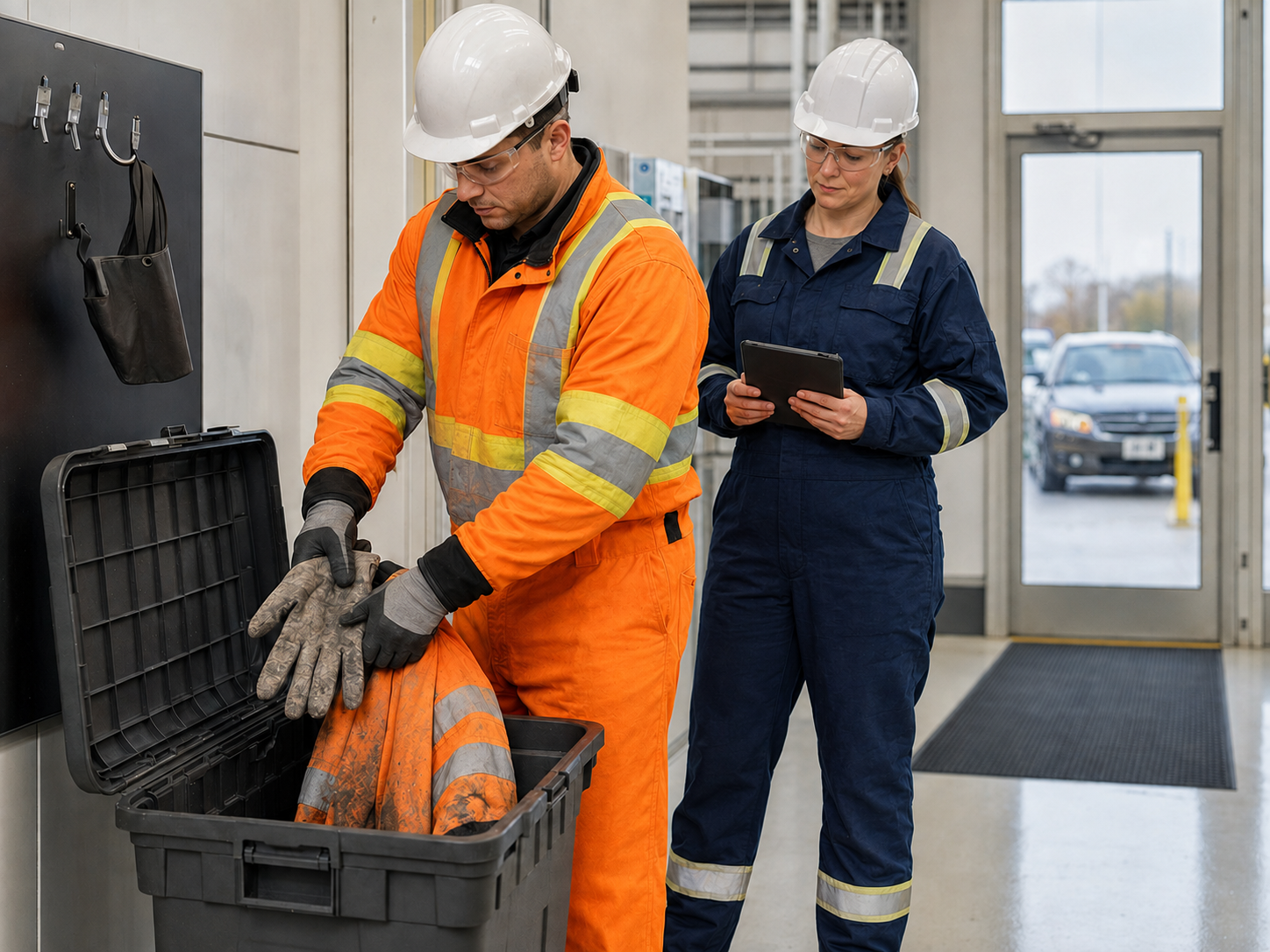
Contamination may occur through direct contact with a hazardous substance, but that is not the only possibility. PPE can also become contaminated during handling, removal, transportation, cleaning, or improper storage.
According to recently published CCOHS guidance, chemical contaminants may create several continuing risks:
- Contaminants can transfer to workers’ skin during PPE removal.
- Contaminated equipment can spread substances into clean workplace areas.
- Certain chemicals may continue to release vapours through off-gassing.
- Vehicles and storage areas can become secondary contamination points.
- Workers responsible for cleaning PPE may be exposed without suitable controls.
Contamination may not always be visible. Equipment that appears relatively clean should not automatically be considered safe when it has been exposed to hazardous dust, vapours, liquids, or residues.
How Workplace Contaminants Reach the Home
When contaminated PPE leaves the controlled work environment, the hazard can travel with it. Chemicals may be carried on work gloves, clothing, boots, tools, vehicles, skin, or hair. Once inside a home, these substances can transfer to floors, furniture, laundry equipment, and other household surfaces.
NIOSH identifies this as take-home exposure and notes that family members and pets may also come into contact with workplace chemicals. Children can be particularly vulnerable because they spend more time near floors, frequently place their hands or objects in their mouths, and are still developing. The safest approach is to prevent contaminants from leaving the workplace in the first place.
Why PPE Should Not Automatically Be Washed at Home
There is no universal method for cleaning reusable PPE. A process that works for one glove, garment, or contaminant may be ineffective for another.
Water, heat, detergents, solvents, or aggressive cleaning can degrade protective coatings, fibres, seams, reflective material, or other performance features. In some cases, ordinary laundering may spread contamination rather than remove it. CCOHS advises that PPE decontamination should not take place in homes, personal vehicles, public laundry facilities, or living quarters. Hazardous materials such as lead or asbestos may require professional cleaning services.
Before cleaning any reusable PPE, confirm:
- The substance involved
- The material and construction of the equipment
- Manufacturer cleaning and decontamination instructions
- Whether specialized facilities or services are required
- Whether cleaning could create an airborne, splash, or contact hazard
- How the wastewater, filters, residue, or disposable materials will be handled
If the workplace cannot verify that an item can be cleaned safely and effectively, it should not improvise a laundering method.
Building a Safer PPE Decontamination Process
A written procedure helps prevent important decisions from being made differently from one shift or worker to another.
An effective process should include:
- Identify the contaminant. Review the workplace hazard assessment, product documentation, safety data sheet, and manufacturer guidance.
- Control removal and handling. Train workers to remove equipment without transferring contaminants to their skin, clothing, or surrounding surfaces.
- Separate dirty and clean areas. Use designated decontamination and storage zones so used equipment does not come into contact with clean PPE.
- Contain equipment during transportation. Bag and seal contaminated items when required, keep them separated from workers, and avoid transporting them in personal vehicles.
- Protect the person performing the cleaning. Cleaning contaminated equipment may require gloves, protective clothing, eye protection, or respiratory protection based on the hazard.
- Inspect after decontamination. Confirm that the equipment remains clean, undamaged, properly fitted, and capable of performing as intended.
Workers should receive training on the complete process, including where used PPE belongs, who is authorized to clean it, and how to report damaged or heavily contaminated equipment.
When Should Contaminated PPE Be Replaced?
Decontamination does not guarantee that every item can be returned to service. PPE may need to be discarded when it:
- Shows tears, cracking, thinning, stiffness, damaged seams, or deterioration
- No longer fits or functions correctly
- Does not meet the manufacturer’s condition or service-life requirements
- Has been involved in an incident that may have compromised its protection
- Cannot be effectively decontaminated
- Has absorbed or retained a hazardous substance
The correct disposal method depends on the contaminant and applicable environmental requirements. Contaminated equipment should never be placed into ordinary waste without first confirming the appropriate procedure.
Select PPE with Its Full Service Life in Mind
Cleaning, storage, inspection, and replacement should be considered when equipment is first selected, not only after contamination occurs.
When comparing industrial safety gloves, review the actual hazards, required protective ratings, glove material, expected exposure, manufacturer care instructions, and whether the product is intended to be reused. The least expensive option may not provide the best value if it deteriorates quickly or cannot be safely maintained.
Stalwart Safety works with distributors, employers, and safety professionals to identify protective equipment suited to real workplace conditions. If your organization needs support selecting gloves or related PPE for chemical exposure, industrial handling, contamination-sensitive environments, or combined hazards, speak with an experienced workplace PPE supplier.
Explore Stalwart Safety’s complete product range or contact our team today. We will help you evaluate the application, understand the hazards, and identify protection that supports both worker safety and responsible PPE management.