Protecting EV Technicians: Why Electrical Hazard PPE Isn’t Optional
Electric vehicles are changing the automotive industry at an incredible pace. They’re quieter, cleaner, and more efficient—but behind that smooth ride is a serious amount of electrical power.
For technicians, manufacturers, and maintenance teams, working around EVs introduces a completely different level of risk compared to traditional vehicles. High-voltage systems, lithium-ion battery packs, and energized components create hazards that simply can’t be ignored.
That’s why electrical hazard PPE and arc flash PPE have become essential in modern EV environments. In this industry, safety equipment isn’t optional—it’s critical protection against potentially life-threatening electrical incidents.
The EV Boom Is Reshaping the Industry
Electric vehicle adoption continues to surge across North America.
In 2022 alone, EV sales in the United States jumped by roughly 55%, with battery-electric models leading the way. Government incentives, manufacturing investments, and consumer demand are accelerating the transition toward electrified transportation faster than ever before.
But while EV technology continues advancing, the risks associated with servicing these systems are increasing as well.
Unlike traditional vehicles, EVs operate using high-voltage systems that commonly range between 400 and 800 volts. That amount of stored energy can be extremely dangerous when proper safety procedures and PPE are not in place.
The Hidden Electrical Hazards Inside EVs
Electric vehicles may look simple from the outside, but under the hood they contain complex high-voltage systems capable of causing severe injury or death.
Technicians face several major risks when servicing EVs:
High-Voltage Components
Contact with energized cables, connectors, or battery systems can result in serious electric shock or electrocution.
Even a single mistake can have catastrophic consequences.
Stored Energy in Battery Systems
Lithium-ion battery packs hold enormous amounts of energy.
If damaged, improperly handled, or exposed to thermal runaway conditions, batteries may:
- Ignite
- Explode
- Release dangerous heat and gases
This makes proper PPE and safety procedures absolutely essential.
Retained Voltage
One of the most overlooked hazards in EV servicing is retained electrical energy.
Even after a vehicle has been powered down, some components may still carry dangerous voltage levels. Assuming a system is safe without proper testing can lead to devastating accidents.
That’s why electrical verification procedures and insulated protective equipment are so important.
Why NFPA 70E Matters for EV Safety
As EV adoption grows, standards like NFPA 70E are becoming increasingly important in automotive and industrial workplaces.
NFPA 70E provides guidelines for:
- Identifying electrical hazards
- Performing risk assessments
- Establishing safe work practices
- Selecting proper PPE for energized work
The standard helps employers and technicians understand how to reduce the risks associated with electrical systems—including those found in electric vehicles.
But understanding the rules is only part of the equation. Workers also need the right equipment to protect themselves when something goes wrong.
Arc Flash PPE: Your First Line of Defense
An arc flash is far more dangerous than a simple spark.
It’s a violent release of energy capable of producing:
- Extreme heat
- Intense light
- Pressure waves
- Flying debris
Arc flash temperatures can reach up to 35,000°F —hotter than the surface of the sun.
Without proper protection, the results can be catastrophic.
Arc-Rated Clothing
Modern arc flash PPE includes arc-rated garments specifically designed to resist ignition and minimize burn injuries during an electrical incident.
These garments are commonly tested to standards such as:
- ASTM F1506
- NFPA 70E requirements
Arc-rated clothing helps reduce the severity of injuries caused by thermal exposure during an arc flash event.
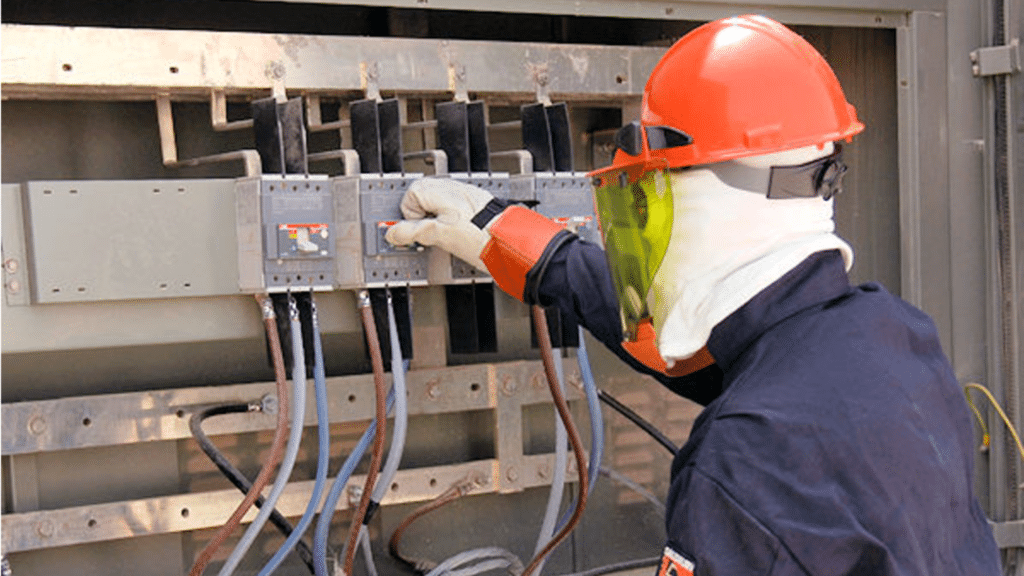
Face Shields and Helmets
The face and eyes are especially vulnerable during electrical incidents.
Arc-rated face shields and helmets help protect workers from:
- Flash burns
- Flying debris
- Intense radiant heat
- Blinding light exposure
In EV battery environments, this level of protection is essential.
Shock Protection Equipment
Electrical hazard PPE also includes insulated tools and emergency safety equipment.
One important example is a rescue hook, which allows workers to safely pull an injured technician away from an energized source without becoming a second victim.
In high-voltage environments, preparation can save lives.
Why PPE Is Essential in EV Facilities
In EV service bays, battery manufacturing plants, and high-voltage maintenance areas, workers interact with energized systems daily.
The risks are real:
- Accidental contact
- Arc flash incidents
- Battery failures
- Electrical burns
The right PPE dramatically reduces those risks while helping businesses:
- Improve workplace safety
- Reduce downtime
- Meet compliance standards
- Protect skilled technicians
Because when high voltage is involved, there’s no room for shortcuts.
Building a Safer EV Workplace
As the electric vehicle industry continues expanding, companies need to prioritize more than innovation—they need to prioritize worker safety.
That means:
- Proper technician training
- Strict lockout/tagout procedures
- Voltage verification protocols
- Routine safety audits
- Reliable electrical hazard PPE
The technology may be evolving rapidly, but the fundamentals of electrical safety remain the same.
Final Thoughts
The future of transportation is undeniably electric. But behind every EV on the road are technicians working around extremely powerful electrical systems every day.
Protecting those workers requires more than basic awareness. It requires proper standards, strong safety procedures, and dependable arc flash PPE designed for high-voltage environments.
Because when you’re servicing systems capable of storing enough energy to power a home, safety isn’t excessive—it’s essential.