Abrasion Resistance in PPE: ANSI/ISEA 105:2025 vs EN388 Explained
Abrasion resistance is a cornerstone of modern PPE design, especially for workers operating in high-wear environments. Whether on construction sites, in automotive shops, or across manufacturing floors, protective gear must withstand constant friction, scraping, and rough handling.
Standards like ANSI/ISEA 105:2025 and EN388 provide clear frameworks for testing, rating, and selecting abrasion-resistant PPE. Understanding these standards helps workers and safety professionals choose gear that improves safety, durability, and overall job performance.
What Is Abrasion Resistance?
Abrasion resistance refers to a material’s ability to withstand:
- Friction
- Scraping
- Surface wear from repeated contact
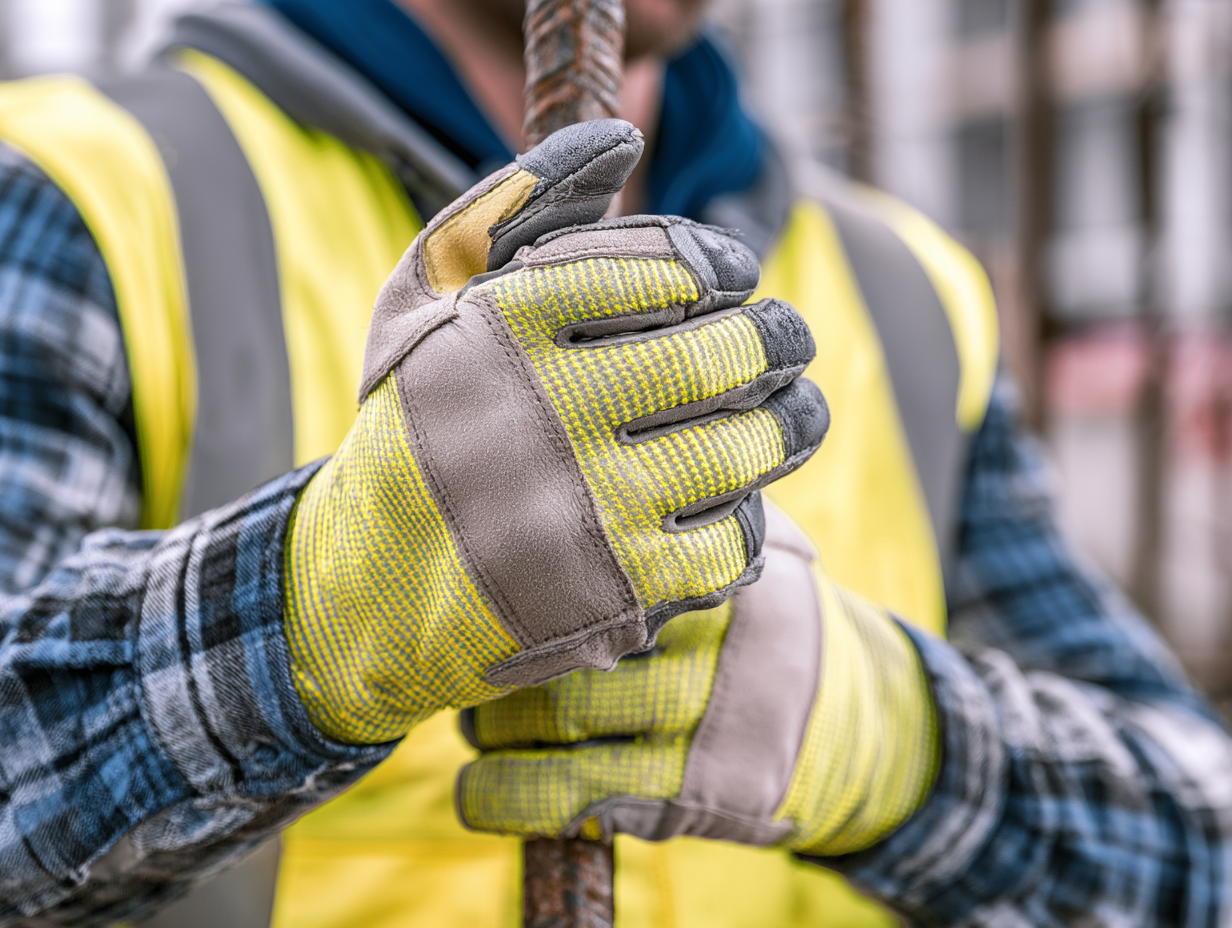
In PPE, this means gloves, sleeves, and garments that maintain their integrity and protective function over time, even in demanding environments.
For workers, higher abrasion resistance translates to:
- Longer-lasting gear
- Reduced risk of tears or holes
- Better protection against injuries
ANSI/ISEA 105:2025 – The North American Standard
Scale and Testing
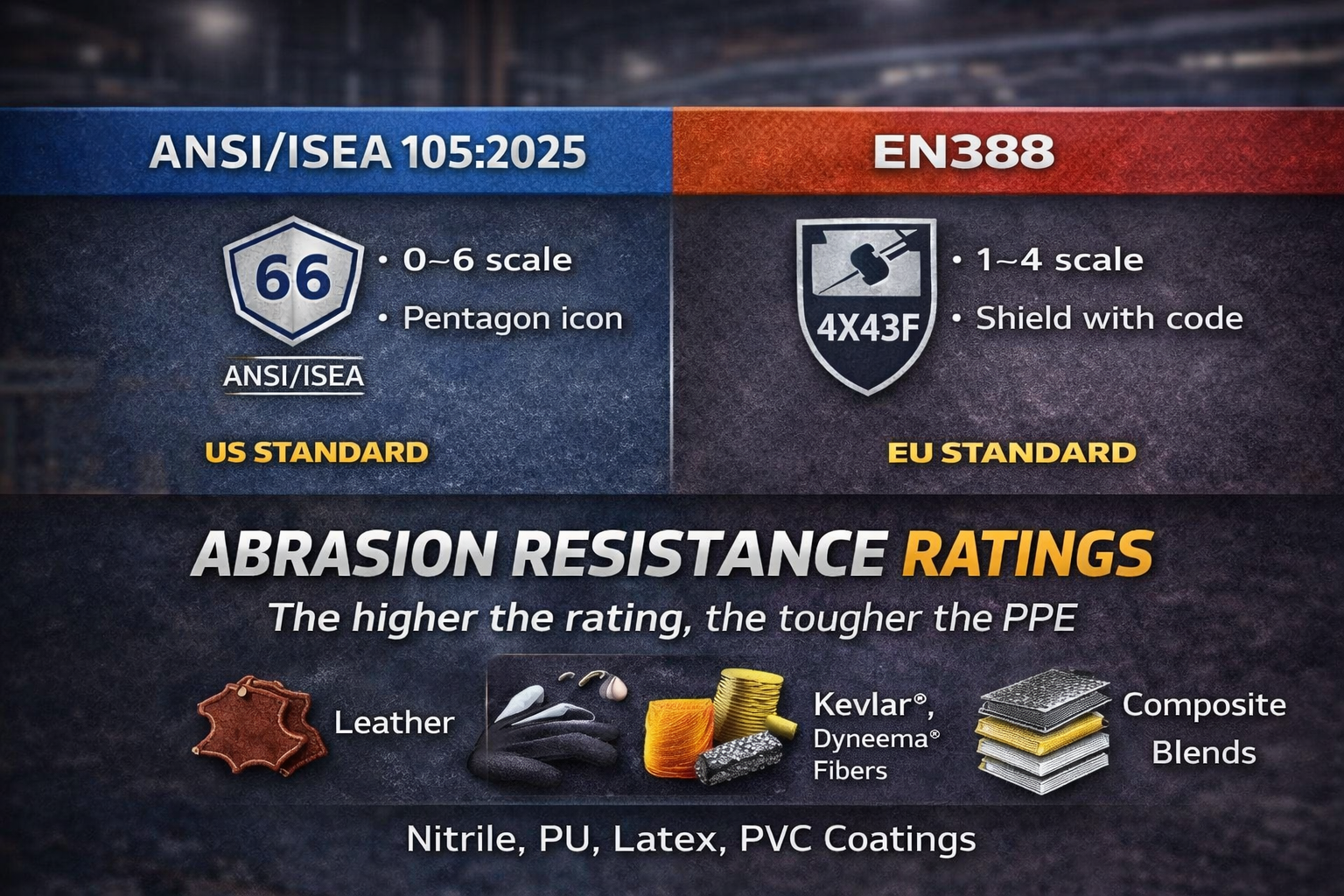
The ANSI/ISEA 105:2025 standard measures abrasion resistance on a 0–6 scale, based on how many cycles a material can withstand before failure.
Testing is performed using a Taber Abraser, which simulates real-world wear under controlled conditions.
- Level 1: Minimum of 100 cycles
- Level 6: Exceeds 20,000 cycles
The higher the level, the greater the durability.
What’s New in 2025?
The latest update focuses on:
- Improved labeling clarity
- Standardized communication for end-users
- Easier identification of the correct PPE for specific tasks
This makes it simpler for workers and safety managers to quickly interpret ratings and select appropriate protection.
Labeling System
ANSI-rated products feature a pentagon-shaped icon that displays the abrasion rating.
This visual system allows for:
- Quick identification in the field
- Reduced confusion during PPE selection
- Better compliance with safety protocols
EN388 – The European Standard
Scope
The EN388 standard evaluates multiple mechanical risks, including:
- Abrasion resistance
- Cut resistance
- Tear resistance
- Puncture resistance
Abrasion Rating Scale
EN388 uses a 1–4 scale for abrasion resistance:
- Level 1: Minimum of 100 cycles
- Level 4: At least 8,000 cycles
Testing involves sandpaper abrasion under standardized pressure conditions.
Glove Markings Explained
EN388-rated gloves are labeled with a string such as:
4X43F
In this format:
- The first number represents abrasion resistance
- Additional characters indicate cut, tear, and puncture ratings
Understanding this code helps users quickly assess a glove’s protective capabilities.
Materials That Improve Abrasion Resistance
Different materials play a key role in enhancing PPE durability.
Leather
- Naturally abrasion-resistant
- Ideal for heavy-duty applications
- Offers durability with reasonable flexibility
Synthetic Coatings
Common coatings include:
- Nitrile
- Polyurethane (PU)
- Latex
- PVC
These coatings:
- Increase surface durability
- Improve grip
- Protect against oils and chemicals
High-Performance Fibers
Engineered fibers such as:
- Kevlar®
- Dyneema®
Provide:
- High abrasion resistance
- Added cut protection
- Lightweight flexibility
Composite Materials
Blended materials may include:
- Steel
- Fiberglass
- Synthetic fibers
These combinations enhance durability but may reduce comfort or dexterity if not properly designed.
PPE Design for Abrasion Resistance
Reinforced Zones
High-wear areas often receive extra protection, including:
- Palms
- Fingertips
- Knuckles
This targeted reinforcement extends product lifespan and improves safety.
Ergonomics and Comfort
Effective PPE must balance:
- Durability
- Breathability
- Flexibility
Even the most abrasion-resistant glove is ineffective if it reduces dexterity or causes fatigue during long shifts.
Proper Selection Matters
Choosing the right abrasion level is critical:
- Too low: Increased wear and higher injury risk
- Too high: Reduced flexibility and unnecessary cost
Matching PPE to the job ensures optimal performance and safety.
Choosing and Using PPE Wisely
To get the most out of abrasion-resistant PPE:
- Match ratings to actual workplace hazards
- Balance protection with comfort and dexterity
- Review ANSI and EN388 markings before purchasing
- Ensure proper fit and consistent use
These steps help maximize both safety and efficiency on the job.
The Bottom Line
Abrasion resistance plays a vital role in protecting workers from everyday wear hazards that can quickly turn into serious injuries. Standards like ANSI/ISEA 105:2025 and EN388 provide reliable benchmarks for selecting the right PPE, but understanding how to apply those ratings is just as important.
By choosing gear that balances durability, comfort, and task-specific protection, businesses can reduce equipment replacement costs, improve compliance, and enhance worker productivity.
Because when your PPE holds up under pressure, so do you.