Chain Mail PPE: When Your Safety Gear is Literally Medieval
When you tell someone you wear chain mail to work, they’re probably picturing a Renaissance faire—not a meat processing plant.
But here’s the reality: those same interlocking metal rings that once protected knights from swords are now protecting workers from band saws, blades, and sharp industrial materials.
And that’s exactly why chain mail PPE—also known as stainless steel mesh safety gear—has become a critical part of modern workplace protection.
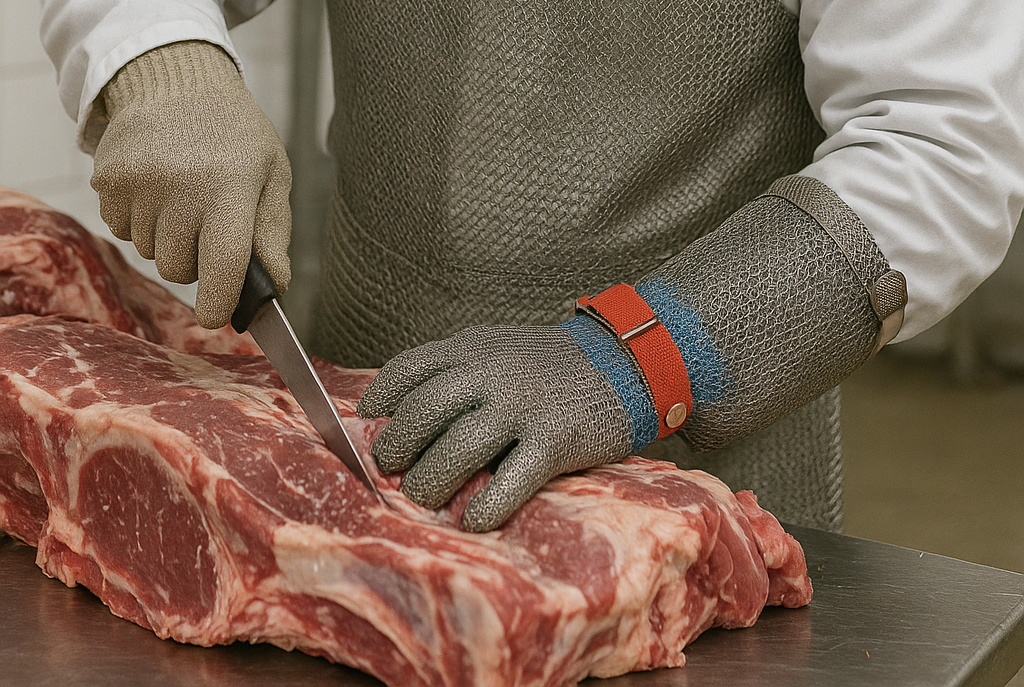
From Battlefield to Workplace Safety
Chain mail may have medieval origins, but today it plays a vital role in industries where cut hazards are constant.
Modern stainless steel mesh gloves, sleeves, aprons, and tunics are designed to:
- Prevent serious lacerations
- Maintain dexterity during precision work
- Provide long-lasting, reusable protection
Unlike traditional PPE, this gear doesn’t wear down easily—and it won’t fail when it matters most.
What Makes Chain Mail PPE So Effective?
High-Grade Stainless Steel Construction
Today’s chain mail PPE is made from high-quality stainless steel (typically 304 or 316 grade), offering:
- Rust resistance in wet or corrosive environments
- Food-safe compliance for processing facilities
- Durability through repeated cleaning and sterilization
- Resistance to chemicals and harsh conditions
The tightly woven rings (typically 3–5mm) strike the perfect balance between flexibility and cut resistance.
Designed for Real-World Use
Modern mesh PPE has evolved far beyond its medieval roots.
- Adjustable straps and closures for proper fit
- Ambidextrous glove designs
- Ergonomic flexibility for movement and control
- Optional textile liners for improved comfort
It’s built to protect—without sacrificing performance.
Types of Chain Mail PPE
Cut-Resistant Mesh Gloves
The most widely used form of chain mail PPE, gloves are designed for high-risk cutting environments.
- Three-finger gloves for improved grip
- Five-finger gloves for full protection
- Partial palm gloves for targeted safety
Arm and Sleeve Protection
Mesh sleeves extend protection beyond the hands and are ideal for:
- Meat processing
- Glass handling
- Metal fabrication
They help prevent injuries caused by slips or unexpected contact with sharp materials.
Mesh Aprons and Tunics
For full-body protection, chain mail aprons and tunics protect the torso and upper legs.
- Accidental knife slips
- Falling tools or blades
- High-speed cutting operations
Specialty Chain Mail PPE
Additional options include:
- Neck guards
- Finger cots
- Thumb protection
- Lower body protection
Where Chain Mail PPE Is Used
Food Processing
This is the most common application for stainless steel mesh PPE.
- Meat processing
- Seafood preparation
- Industrial bakeries
- Cheese production
Workers rely on chain mail for maximum cut protection while maintaining precision.
Manufacturing & Industrial Environments
Chain mail PPE is also widely used in:
- Glass manufacturing
- Metal fabrication
- Recycling and waste management
- Automotive production
Anywhere sharp edges exist, cut-resistant PPE becomes essential.
Understanding Cut Resistance
Most chain mail PPE achieves:
- ANSI/ISEA Level 5 cut resistance
- EN 388 Level 5 rating
This means strong protection against cuts and slashes.
Important: Mesh PPE does not provide strong puncture resistance and should be paired with other protective equipment when necessary.
Maintenance and Longevity
To maintain effectiveness, chain mail PPE requires:
- Regular cleaning and sanitization
- Inspection for broken or worn rings
- Proper drying after washing
- Scheduled replacement over time
With proper care, high-quality mesh PPE can last for years.
Is Chain Mail PPE Worth It?
While chain mail PPE may have a higher upfront cost, the long-term value is clear:
- Reduced workplace injuries
- Lower liability and insurance costs
- Improved worker confidence and productivity
- Long lifespan compared to traditional PPE
In many cases, one prevented injury can justify the investment.
Common Misconceptions
“It’s too bulky.”
Modern designs are flexible and ergonomic.
“It protects against everything.”
It’s excellent for cuts—but not punctures or chemical exposure.
“Only needed for high-risk jobs.”
Most injuries occur during routine tasks.
Final Thoughts: Old Design, Modern Protection
Chain mail PPE is one of the best examples of ancient design meeting modern safety innovation.
By combining durability, flexibility, and high-level cut resistance, it remains one of the most reliable forms of protection in high-risk environments.
Stay safe. Stay protected. Keep your team moving forward.