ANSI/ISEA 105-2024 Explained: How to Read the New Safety Glove Label
Selecting workplace hand protection can become complicated quickly. Two gloves may look similar but provide very different levels of resistance to cuts, abrasion, punctures, heat, or other hazards. Product markings are meant to make those differences easier to understand, but inconsistent symbols and layouts have sometimes made comparisons harder than they should be.
ANSI/ISEA 105-2024 addresses that problem by introducing a more standardized approach to communicating important safety glove ratings. For safety managers, distributors, supervisors, and workers, understanding the updated label can support more informed product selection and clearer conversations about workplace hazards.
What Is ANSI/ISEA 105?
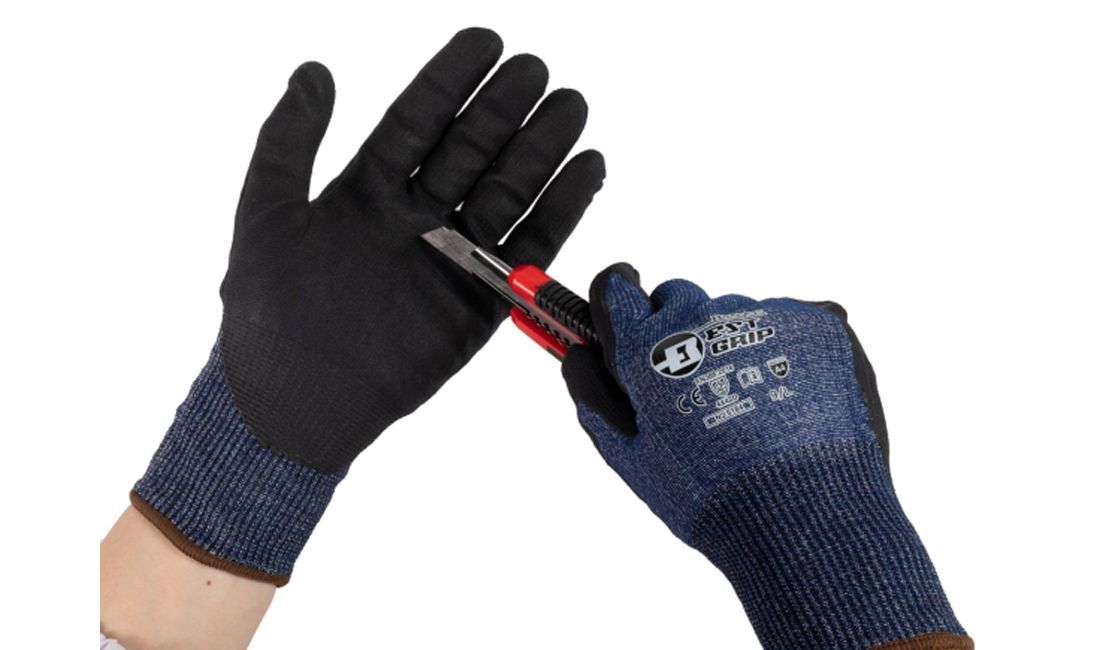
ANSI/ISEA 105 is a voluntary North American standard for classifying the performance of hand and arm protection. It provides testing methods and rating scales for several protective properties, including resistance to cuts, abrasion, punctures, heat, flame, cold, and certain chemical exposures.
The standard does not tell an employer exactly which glove to purchase. Instead, it provides a consistent way to communicate how a product performed under controlled testing. Employers can then compare those results against the hazards identified through their workplace assessment.
The 2024 edition also reflects a broader focus on both hand and arm protection, meaning its scope includes protective sleeves as well as gloves.
What Changed in ANSI/ISEA 105-2024?
The most visible change is a new pentagon-shaped marking that displays three mechanical safety glove ratings in one standardized format:
- Cut resistance
- Abrasion resistance
- Puncture resistance
Before this update, manufacturers could use different shields, icons, and graphics to communicate performance. That variation could make it difficult to compare products quickly, especially when several glove brands were being considered. The new pentagon creates a consistent location for each rating. It is intended to help purchasers and end users identify key performance information without having to interpret a different label design for every manufacturer.
Importantly, ANSI/ISEA 105-2024 did not introduce major changes to the established cut, abrasion, and puncture testing levels. The primary change is how those results are displayed and communicated.
How to Read the New Pentagon Marking
Each position inside the pentagon represents a different type of mechanical protection.
Cut resistance appears at the top. It uses the familiar A1 through A9 scale. Higher levels indicate that the material resisted a greater amount of cutting force during testing. However, a higher number is not automatically better for every job. Increased protection may come with trade-offs involving weight, flexibility, dexterity, or cost.
Abrasion resistance appears on the left. It is rated from 0 to 6. Abrasion testing evaluates how well the glove material withstands repeated surface wear. This can be particularly important in material handling, construction, fabrication, maintenance, and other tasks involving rough surfaces.
Puncture resistance appears on the right. It uses a 0-to-5 scale and evaluates resistance to penetration by a standard probe. This rating should not be confused with hypodermic-needle resistance, which is evaluated separately. A glove that performs well against an ordinary puncture hazard is not necessarily suitable for handling needles or similarly sharp, fine objects.
If a particular property was not tested or is not applicable, an “X” may appear in that position. An X should not be interpreted as a rating of zero. It means that the label is not providing a performance classification for that property.
Why One Rating Does Not Tell the Whole Story
Cut resistance often receives the most attention, but a cut level alone does not provide enough information to select an appropriate glove.
For example, a worker handling sharp sheet metal may require cut resistance, but the task could also involve oil, impact hazards, abrasive edges, or the need for fine dexterity. Another worker may require a glove with a lower cut rating but better wet grip and touchscreen compatibility.
The new marking makes three ratings easier to compare, but it does not cover every factor that matters. Buyers should also consider:
- Grip conditions
- Impact or metacarpal protection
- Heat or cold exposure
- Glove coating and liner materials
- Cuff style and area of coverage
- Fit, comfort, and dexterity
- Chemical compatibility
- Task duration and expected wear
No single icon can replace a complete workplace hazard assessment.
What About Gloves with Older Markings?
The absence of the new pentagon does not automatically mean that a glove is unsuitable or that its previous test results are invalid. Existing inventory and products tested under earlier editions may continue to display older markings. Purchasers should confirm which edition of the standard was used, review the manufacturer’s technical information, and verify that the documented ratings match the workplace requirement. When the markings or supporting information are unclear, the supplier or manufacturer should be consulted before selection.
Putting the Updated Standard to Work
ANSI/ISEA 105-2024 gives the hand-protection industry a clearer and more consistent way to communicate several important performance ratings. Its value, however, depends on using those ratings correctly.
Begin with the task and the hazards—not with the highest number on the package. Identify the protection levels that are genuinely required, consider environmental and ergonomic factors, and involve workers in evaluating fit and real-world performance. PPE should also remain part of a broader safety program and should never replace appropriate engineering or administrative controls.
Stalwart Safety offers a wide selection of industrial gloves and protective sleeves developed for different hazards, environments, and performance requirements. Explore the Stalwart product catalogue or contact our team for help identifying hand and arm protection suited to your workplace.
Research verification: The technical changes described above were confirmed through the International Safety Equipment Association and ANSI’s overview of ANSI/ISEA 105-2024.