The Materials Menu for Cut-Resistant Gloves: Choosing the Right Protection for the Job
Cut-resistant gloves aren’t made from a single “miracle fiber.” Instead, they’re built from a menu of materials—each with strengths, limitations, and ideal use cases. Understanding how these fibers behave in real work environments is the difference between a glove that looks good on paper and one that actually protects workers on the job.
Below is a practical breakdown of the most common materials used in modern cut-resistant gloves, what they’re good at, and where caution is required.
1. Para-Aramids (Kevlar®, Twaron®, Technora®)
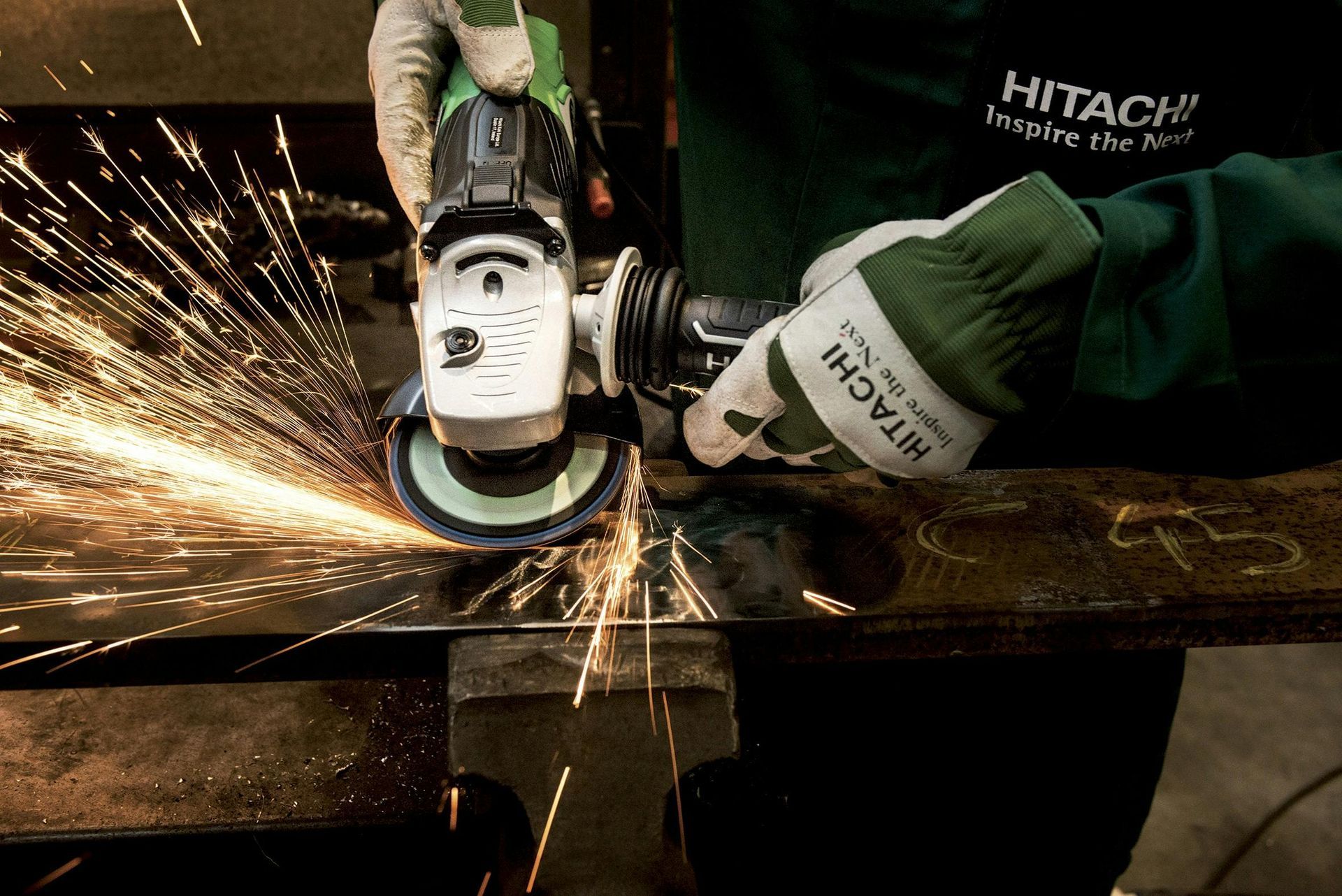
Para-aramids are aromatic polyamides engineered for high tensile strength, strong abrasion resistance, and inherent heat and flame resistance. They don’t melt or drip and retain their structure under sustained heat—making them valuable anywhere sparks, grinders, or hot edges are present.
Manufacturers such as Teijin highlight para-aramids like Twaron® for their strength-to-weight ratio and durability in multi-hazard environments where cut, abrasion, and heat risks overlap.
Why You’d Use It
- Reliable cut and abrasion protection
- Built-in heat resistance
- Well suited for automotive, glass handling, and metal fabrication
Trade-Offs
- UV exposure and certain chemicals can degrade fibers over time
- Laundering chemistry matters
- Heat resistance doesn’t equal immunity to serrated or powered blades
2. UHMWPE / HPPE (Dyneema®, Spectra®)
Ultra-high-molecular-weight polyethylene delivers exceptional cut resistance at extremely low weight. HPPE is soft, flexible, and literally feels cool against the skin—making it ideal for high-dexterity, all-day wear.
Dyneema® and similar fibers are widely used in modern cut-resistant gloves because they balance performance and comfort better than almost any alternative.
Why You’d Use It
- High cut resistance with excellent dexterity
- Lightweight and comfortable for long shifts
- “Cool-to-touch” feel improves worker compliance
Trade-Offs
- Low softening temperature
- Not suitable where contact heat is routine
- Higher cut levels usually require reinforcement with harder fibers
3. Stainless Steel (Filaments or Core Yarns)
Steel micro-filaments or core wires dramatically increase cut resistance and are often used to reach the highest ANSI levels. When blended correctly, steel enables gloves to withstand severe sharp-edge exposure.
Why You’d Use It
- Fast path to ANSI A7–A9 protection
- Durable in metal stamping, glass handling, scrap yards, and slitting lines
Trade-Offs
- Heavier and stiffer feel
- Electrically conductive
- Can feel cold and uncomfortable in certain environments
- Yarn fatigue can create poke-through over time
4. Fiberglass (Glass Fibre)
Fiberglass is a common “cut booster” in composite yarns. It provides strong initial cut resistance at low cost and is often wrapped with HPPE.
Why You’d Use It
- Cost-effective way to increase cut levels
- Thin profile with minimal weight increase
Trade-Offs
- Brittle; fractures with wear and laundering
- Can irritate skin and airways
- Cut performance may decline faster over time
5. Basalt Fibre
Basalt fiber is drawn from volcanic rock and is emerging as an alternative to fiberglass in some applications. It offers chemical resistance and thermal stability while remaining non-conductive.
Why You’d Use It
- Good chemical and heat resistance
- Non-conductive
- Useful in lower to mid cut levels (A2–A4)
Trade-Offs
- Limited top-end cut performance
- Less standardized data and supply
- Potential skin irritation similar to glass
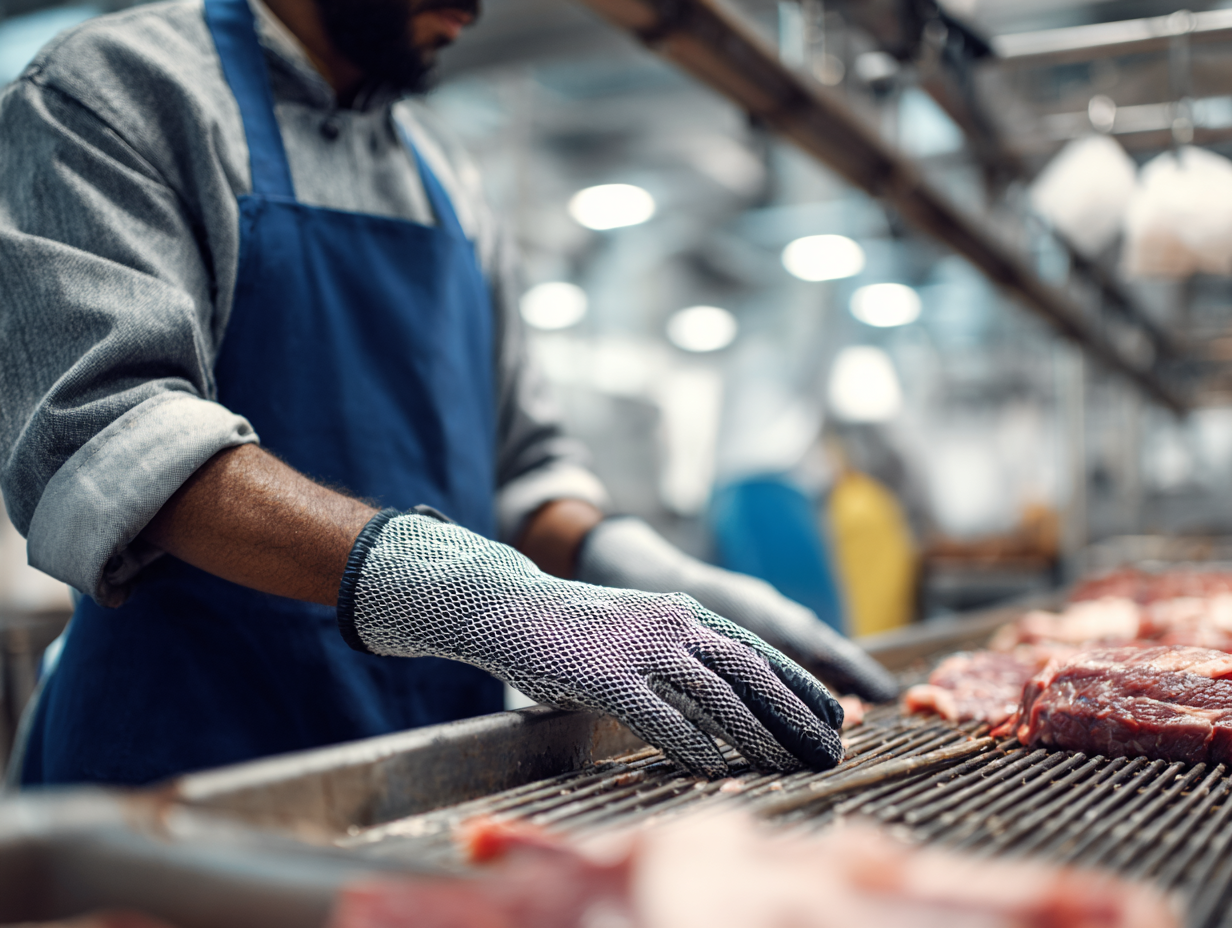
6. Metal-Mesh (Ring Mesh / Chainmail)
Metal-mesh gloves are made from interlocking stainless steel rings and remain the gold standard for knife protection in food processing.
Why You’d Use It
- Exceptional protection against hand knives
- Easy to sanitize and highly durable
- Preferred for boning and meat processing
Trade-Offs
- Heavy and conductive
- Ergonomic fatigue during long wear
- Never suitable for powered or serrated blades
7. Engineered / Composite Yarns (The Real Game-Changer)
The highest-performing knit gloves today rely on composite yarns rather than single fibers. By blending HPPE, aramids, steel, or glass, manufacturers tune cut level, comfort, abrasion life, and cost.
Why You’d Use It
- “Dial-a-glove” flexibility
- Best path to A7–A9 while preserving dexterity
- Tailored solutions for specific hazards
Trade-Offs
- Glass or steel blends can stiffen or shed over time
- Laundering practices matter
- Advanced glass-free, steel-free filaments may improve comfort
8. Comfort & Carrier Fibers (Nylon, Polyester, Spandex)
These fibers don’t add cut resistance—but they make high-performance gloves wearable.
Why You’d Use It
- Fit and stretch recovery
- Moisture management
- Improved dexterity and sizing tolerance
Trade-Offs
- Provide no cut protection on their own
9. Coatings: Grip ≠ Cut Resistance
Palm and finger coatings don’t significantly raise cut scores, but they dramatically improve real-world safety by stabilizing grip and extending glove life.
Common options include:
- PU: Thin, tactile, dry-grip
- Foamed/Sandy Nitrile: Excellent abrasion and oil resistance
- Latex: Tacky grip; avoid oils and solvents
- PVC: Strong chemical resistance; stiffer feel
Grip reduces slips—and fewer slips mean fewer emergency cuts.
Matching Materials to Job Risk
- A1–A3 (Light Cut): HPPE or aramid shells with PU coating
- A4–A6 (Medium Cut): HPPE or aramid with glass or steel assist; nitrile coating
- A7–A9 (High Cut): Engineered composites, often steel-reinforced; validate laundering cycles
- Knife Work (Food): Stainless ring mesh only
- Heat + Cut: Aramid-rich blends; avoid HPPE as the primary load-bearing fiber
Quick Decoder: ANSI/ISEA 105 (ASTM F2992) classifies cut A1–A9 by grams required to cut through material—A1 starts at ≥200 g, A9 at ≥6000 g.
Field Notes That Save Fingers
- Coatings improve grip, not cut resistance.
- Glass and steel fatigue over time. Monitor comfort complaints and performance changes.
- HPPE and heat don’t mix. For hot-sharp tasks, lean aramid-heavy.
- Mesh has rules. Ring-mesh is for hand knives only, not powered blades.
- Validate cut levels. Hazard audits beat catalog claims every time.
Conclusion: Start with the Hazard, Not the Hype
There’s no single “best” material for cut-resistant gloves. The right solution depends on understanding the hazard: edge geometry, force, motion, fluids, heat, and duration of exposure.
Start by selecting the yarn system that matches the cut risk. Then choose a coating that fits the environment. Finally, factor in comfort—because a glove workers won’t wear is a glove that doesn’t protect.
When materials, construction, and real-world use align, cut protection stops being theoretical—and starts keeping hands safe.